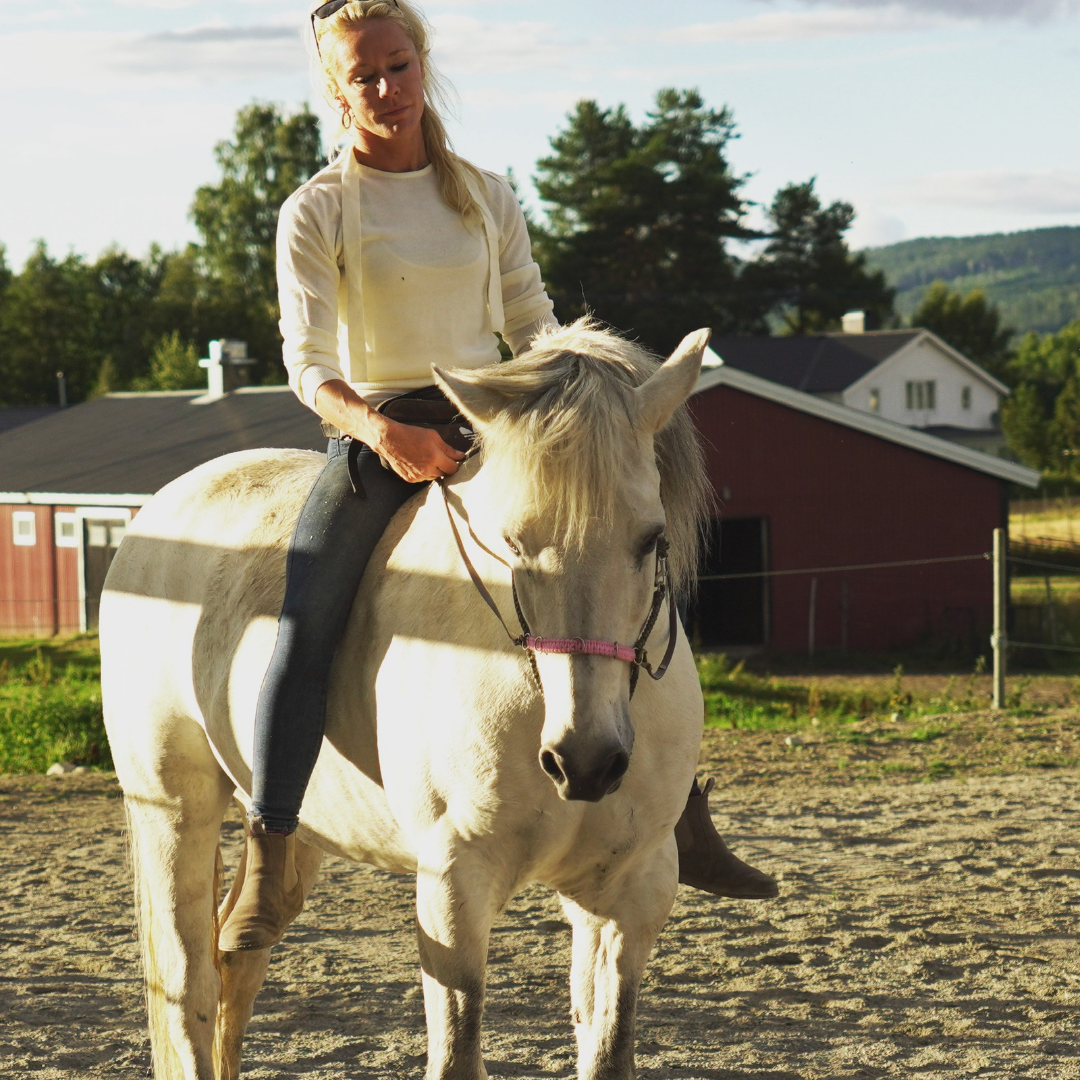
What Koppar Taught Me About Movement—and Standing Still
Oct 23, 2026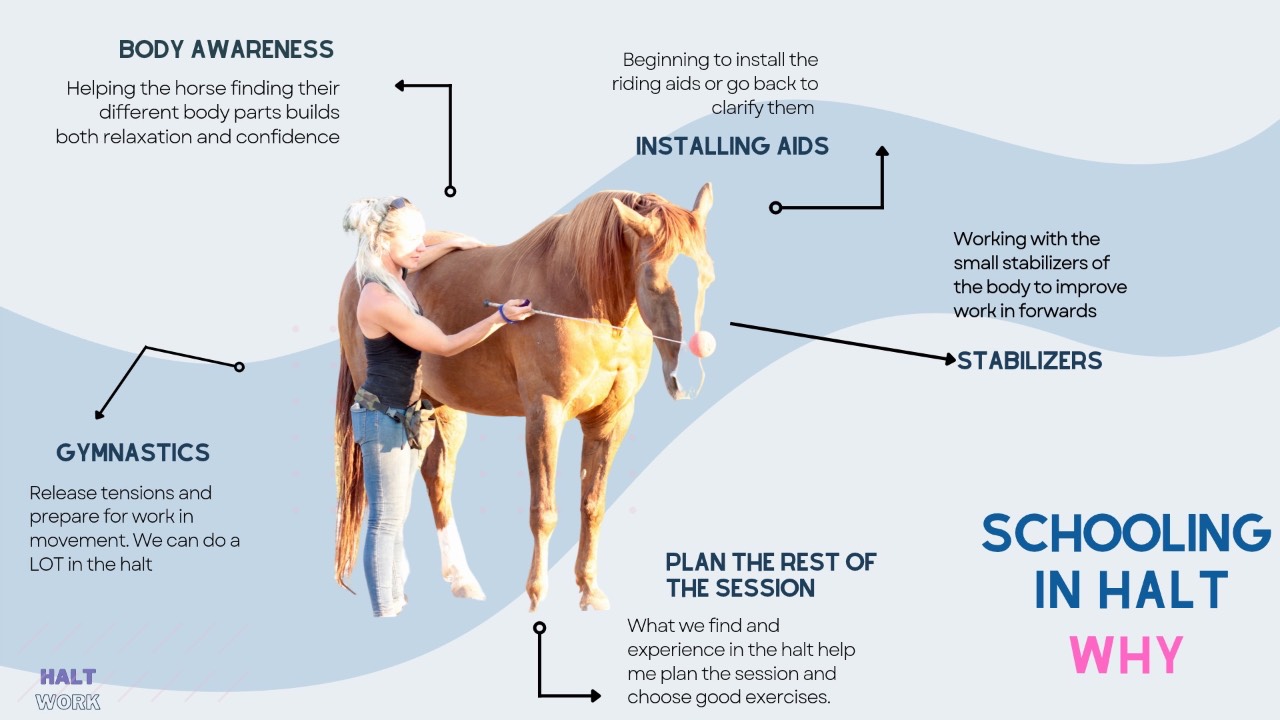
My trotter warmblood, Koppar, changed the way I think about teaching movement. Some of his (and mine) most important lessons happened while we were standing still.
He had a body that made balance and coordination challenging. He often seemed to struggle with knowing where his body parts were and how to organise them. A movement that looked like a small request from the outside could involve a great deal for him to figure out.
I already believed in slowing things down and giving a horse time to find coordination in walk before even trying for anything advanced in trot. But with Koppar, I discovered how much there was to explore in the halt itself—and how far those discoveries could reach into our work in movement.
Dressage while standing still
Together, we explored flexion, bend, small weight shifts and the building blocks of lateral work in halt.
This was different from parking. In parking, we were developing the ability to remain in a place. Here, standing still gave us an opportunity to actively explore how he organised his body.
A small change in flexion or bend could become a question: how could the rest of his body participate? With a weight shift, we could explore a change in balance without immediately asking him to take a step.
There was plenty happening, even though we weren’t travelling anywhere.
I come from the Academic Art of Riding in my riding background and there work in halt very much is tough of as dressage while standing still. And a gait we educate our horses in. When doing my cross over to reward based I was already doing halt work regularity but the way we can explain some movement via targets is SOOOO effective compared to negative reinforcement (in my opinion) so I found a whole set of new tools to help him in halt. The halt gave him time to explore his own body and find connections without also having to coordinate forward movement.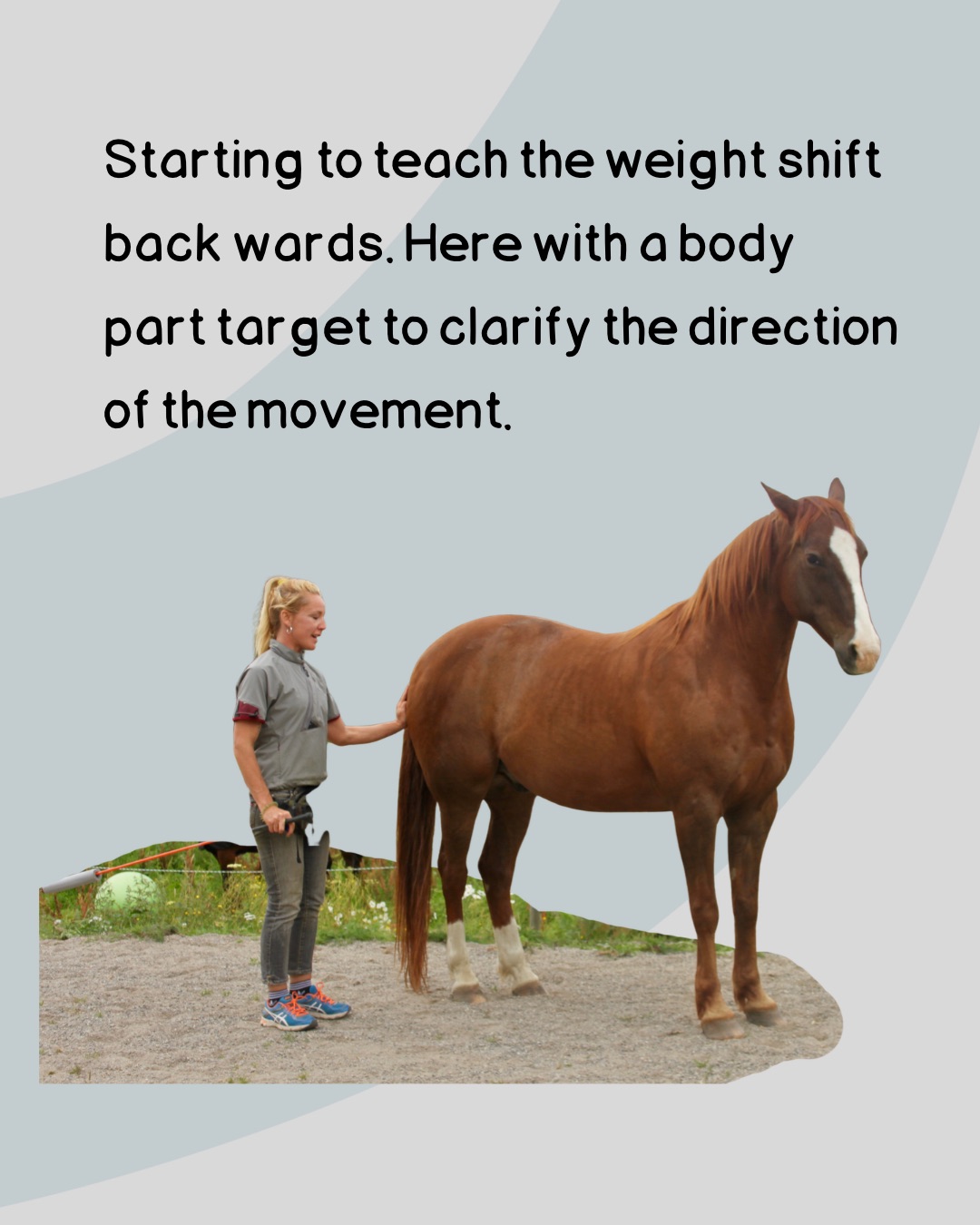
I expected this to be useful. I hadn’t imagined how profoundly it would influence our work.
The connections we explored in halt became part of what we could access in movement. What had seemed like a small area of training branched out into so much more.
Finding relaxation through precision
One of the things that benefitted us most was how much relaxation we found through being this precise. Often we for relaxation reasons also want to help them better with the BIG picture first and this is where we really want to start invest before going to prescion. But as always. Every horse is different.
Physical and mental balance go hand in hand, but sometimes one needs to lead a little. With Koppar, helping him find a more comfortable physical balance in very specific ways seemed to give us a way into greater emotional relaxation.
I thought of it almost as stacking his body parts: helping him discover an organisation he could feel more at home in.
We explored this through small, clearly explained tasks, reinforcement and time. Precision meant paying attention to subtle changes and being clear about what I was inviting him to try. It also asked more of me as a teacher. I needed to notice what was available to him and recognise a useful beginning.
When we found that clarity, he seemed able to settle more deeply.
That stayed with me. I often feel we have so much to gain from being open and allowing our horses room to explore. Koppar helped me see how much room for discovery there can also be within a very small, precise task.
What does this individual need?
Horses bring different bodies, experiences and sensitivities to our training. With Koppar, I felt that losing physical balance could also be emotionally unsettling. Helping him organise his body was therefore an important part of helping him feel comfortable in the work.
That experience made me more curious about the relationship between clarity and freedom in training.
How much information does this horse need? How small does the task need to be for them to explore it comfortably? When would a narrower (we always strive for clarity) setup help—and when are they ready for more possibilities?
Understanding shaping with positive reinforcement gave me a way to approach those questions. I could look for a small change to reinforce, then allow time for it to become familiar before building further. Koppar’s responses helped me judge whether the steps I had chosen were useful to him.
We were both learning. He was discovering ways to organise his body, and I was learning how to make those discoveries easier to access. And now, some 15 years later I'm still practicing what he taught me in my teaching and work with my own horses.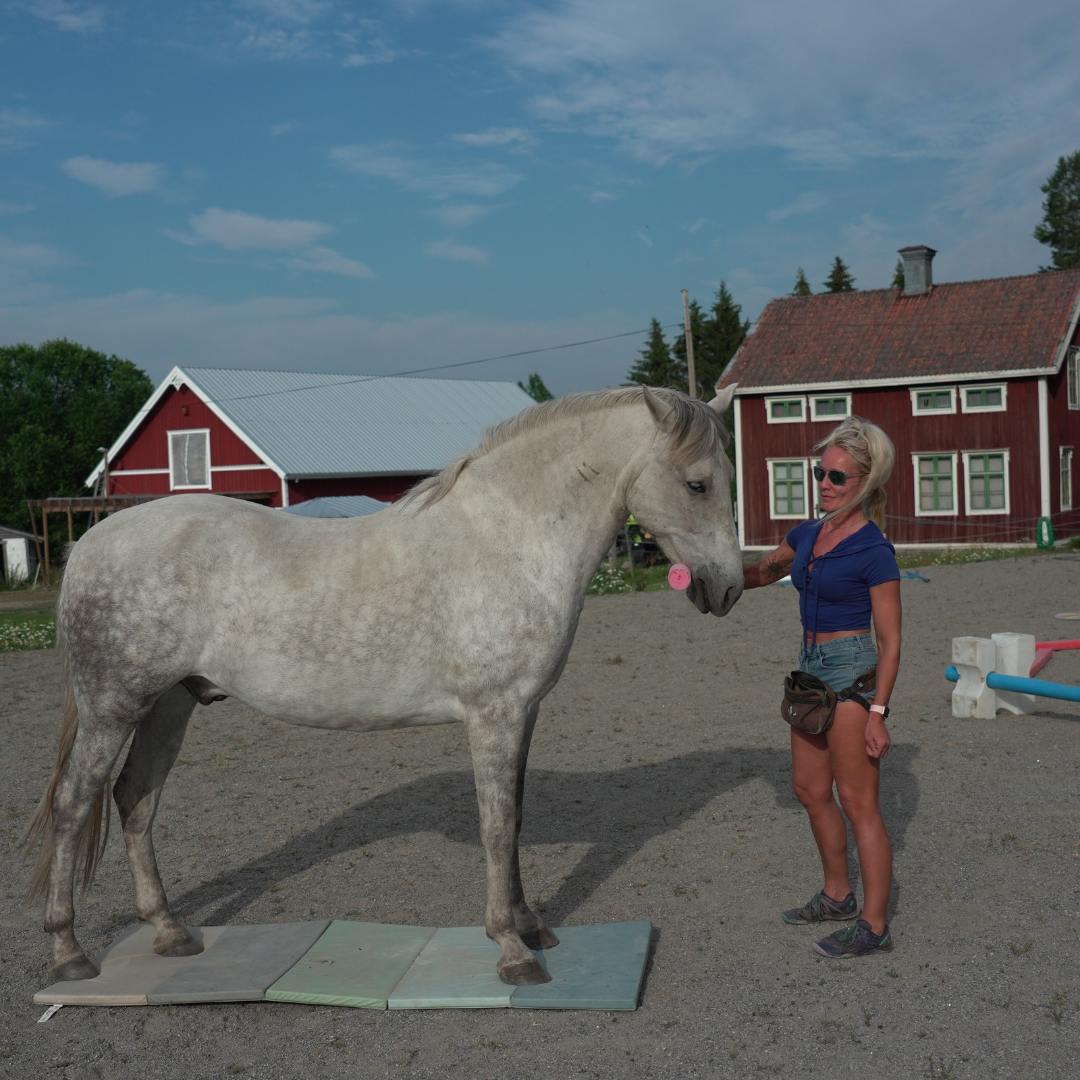
A broader understanding of movement
Koppar expanded my view of where movement training begins.
Flexion, bend and a subtle shift of weight became meaningful parts of our dressage in their own right. I learned to give them time and attention, and to appreciate how much learning could happen within them.
That still influences how I teach today. I look for beginnings the horse can understand and physically explore, while staying curious about where those beginnings might lead.
I thought slowing things down would help us. Koppar showed me just how much we could discover by standing still.